

How To Stay On A Project Longer

# Recruitment
# Project-discussion
# Guide
# Senior-expert
Four Habits Of Experts Who Get Asked Back
October 1, 2026
Alba Guix

Aleksandar Scekic
How To Stay On A Project Longer
We know that getting onto a project feels like the finish line. That is not true. It is the start, and the habits that keep experts on a project for years are quieter than most people expect.
This comes from our session with Alba Guix, Vice President of Operations at OneForma, who has spent more than fifteen years leading the recruitment and production teams that work side by side with experts on every project.
You passed qualification and the first tasks arrived. This post covers how to stay on a project longer with four habits, what your performance record does for you, and what it means when the work suddenly slows down.
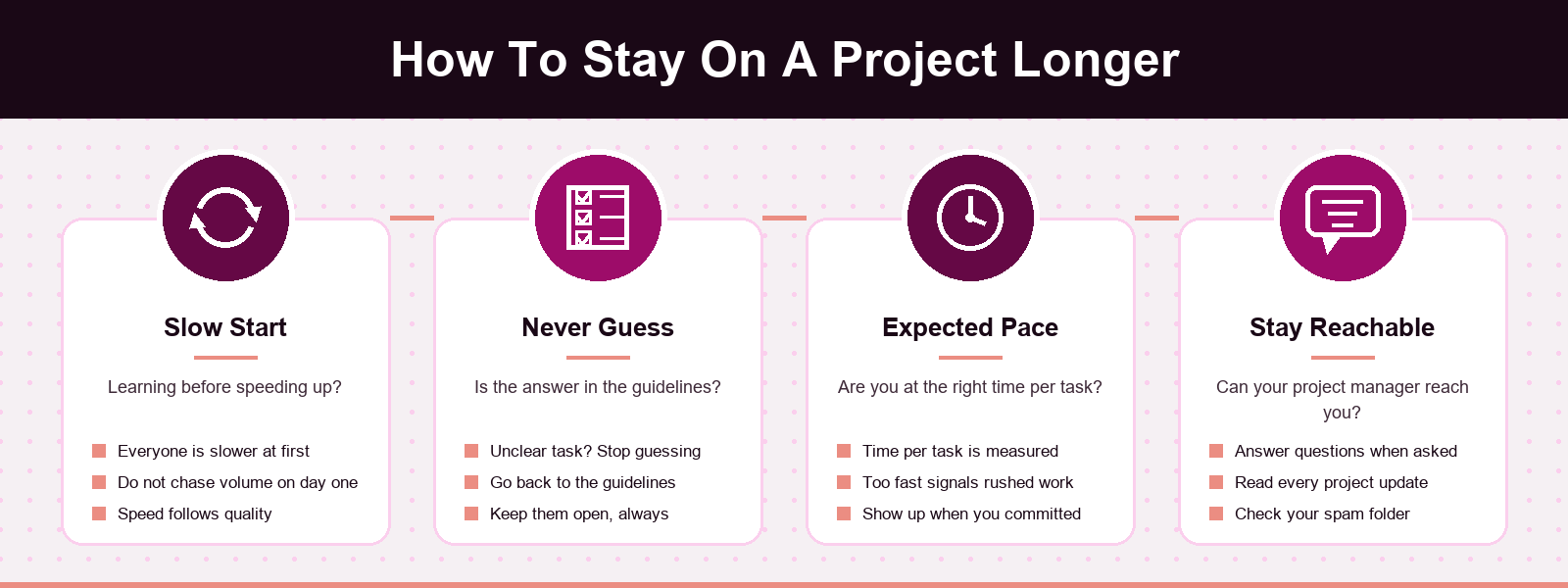
How to stay on a project longer: four habits, slow start, never guess, expected pace, stay reachable
Slow Down At The Start
"Once you are in the project, it doesn't mean everything is done. On the contrary, everything is starting."
Everyone is slower on a new project, whatever the project is. There is always a learning curve, and at first you may wonder how a single task can take so long. That is normal. After a few tasks you get faster without trying, because the rules stop being new.
The mistake is chasing volume from day one. It is natural to want to be active and move fast, maybe even to set yourself a target. But rushing hurts quality, and quality is what the project remembers about you. Everything you did carefully during qualification now has to carry into the real work. Give yourself the first days to learn it properly, and the speed follows.
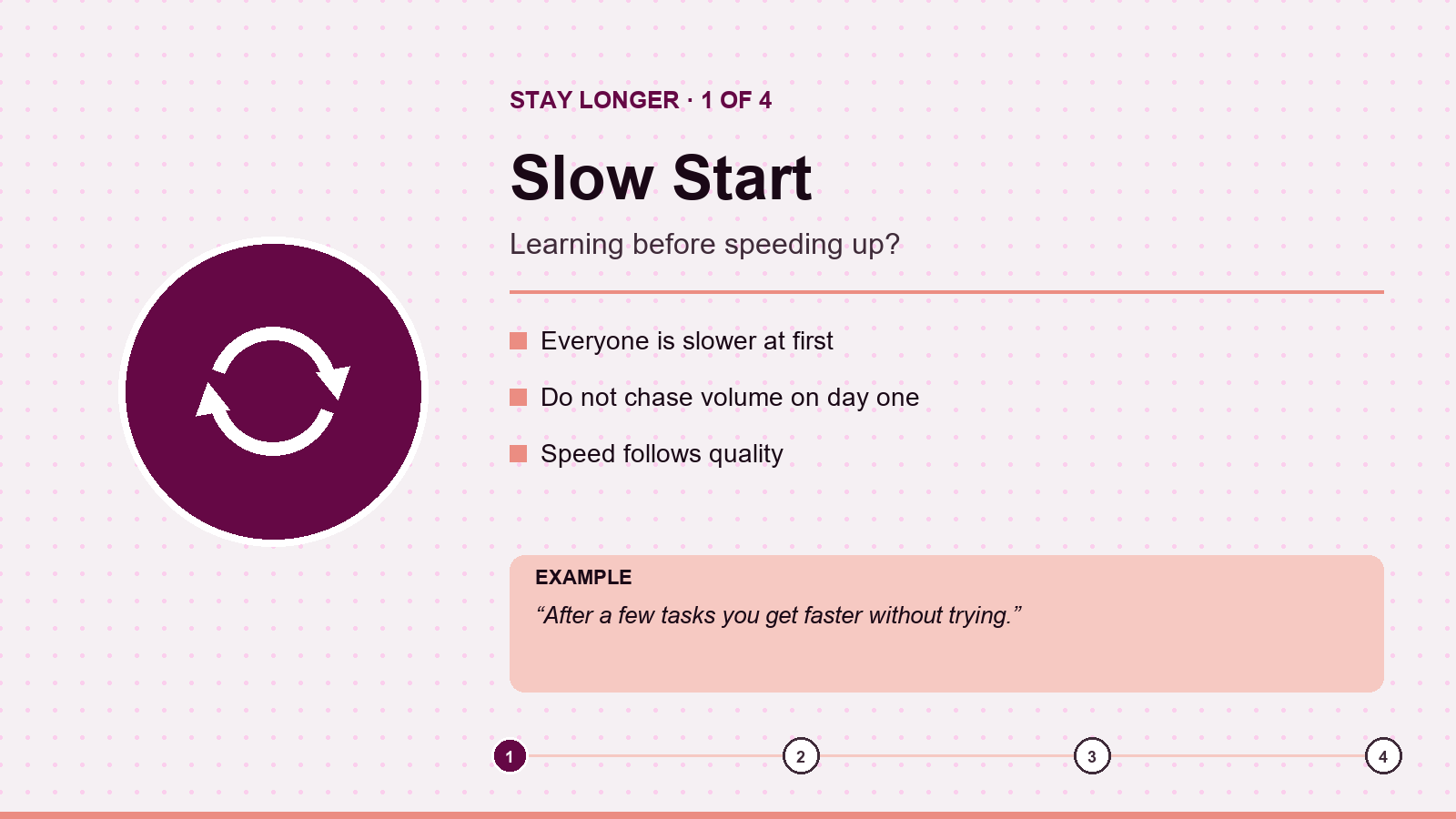
Habit 1 for staying on a project: slow down at the start and accept the learning curve
Never Guess, Go Back To The Guidelines
When a task is unclear, the tempting move is to make your best guess and keep going. Alba was direct about this: do not guess. Guessing is what raises doubts about a profile, because it shows up as work that does not match what the project needs.
Go back to the guidelines instead, every time. After you have done a task type many times, the rules will be in your head and you will check them less. Keep them open anyway. Asked which habit separates experts who stay for years from those who stay for weeks, Alba named this one: keep using the guidelines as your reference tool, because they include everything the project needs from you.
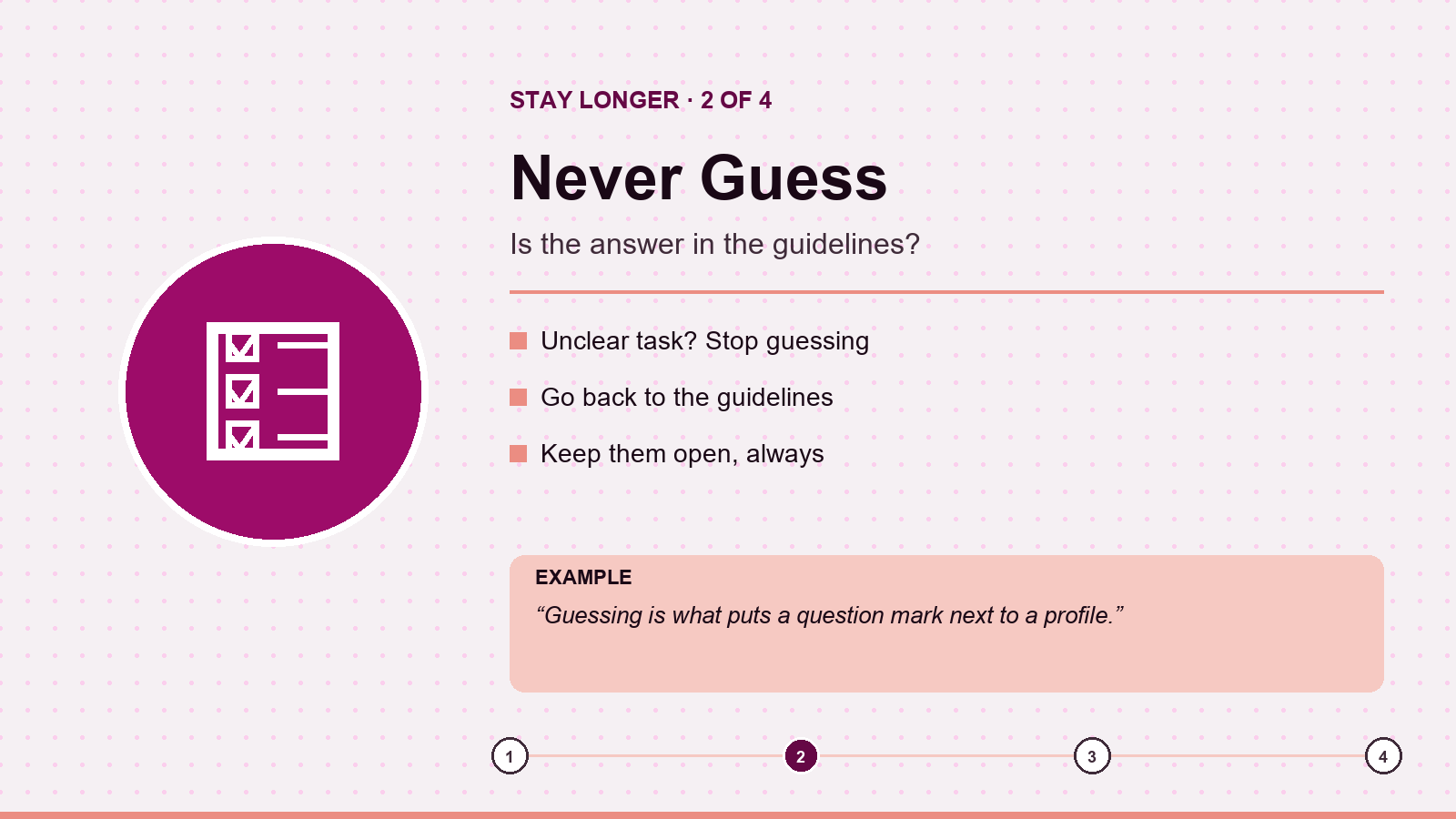
Habit 2 for staying on a project: never guess, go back to the project guidelines
Work At The Expected Pace
Most projects have an expected time per task, and it is measured. It reflects how long the task takes when it is done well. Being much faster than expected is not the win it looks like, because speed that far ahead can mean the judgment was skipped.
"If someone is faster in doing something, that may indicate that they haven't really taken the time to make an evaluation."
Being much slower does not help either. Aim for the right time, not the shortest. The same goes for your availability: if you committed to certain hours, show up for them, because project managers plan around you. Things happen, and that is understood. But experts who are consistent become the talent project managers rely on. Alba has seen many project managers share lists of experts they worked well with, so those experts skip much of the process on the next project.
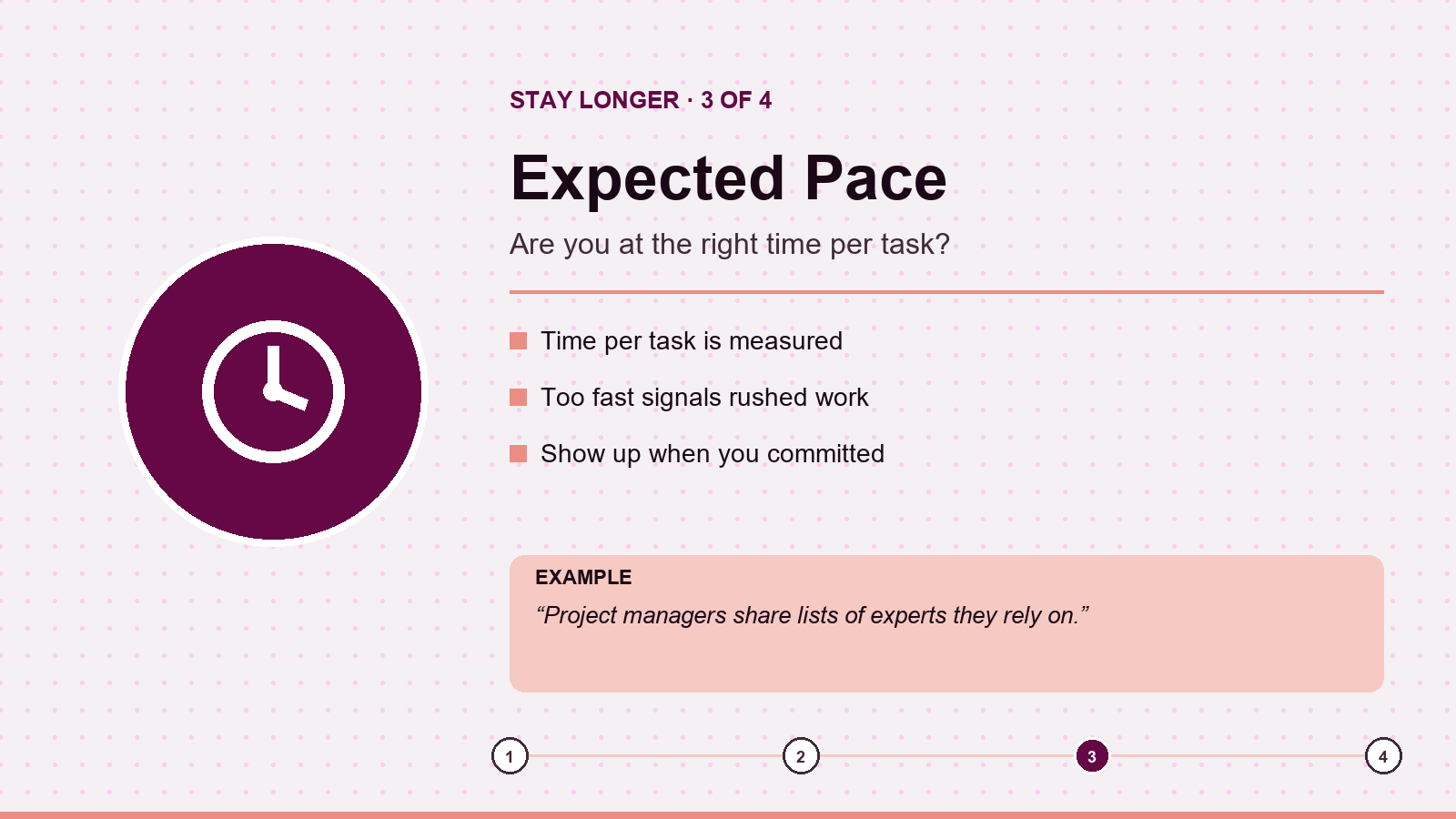
Habit 3 for staying on a project: work at the expected time per task and show up when committed
Stay Reachable And Check Your Spam Folder
Staying on a project is also a working relationship with your project manager. Consistency means completing tasks, and also answering their questions when they ask and reading their updates when they send them.
That only works if their emails reach you. Project emails often come from a shared address that includes every project manager on that project, not from one person's name, so they land in spam more often than anyone would like. Alba called this out as a real, recent problem: experts miss a request for action and quietly drop out of a project they wanted to stay on. A missed email can mean a missed next step. Check your spam folder regularly, especially while you wait to hear back.
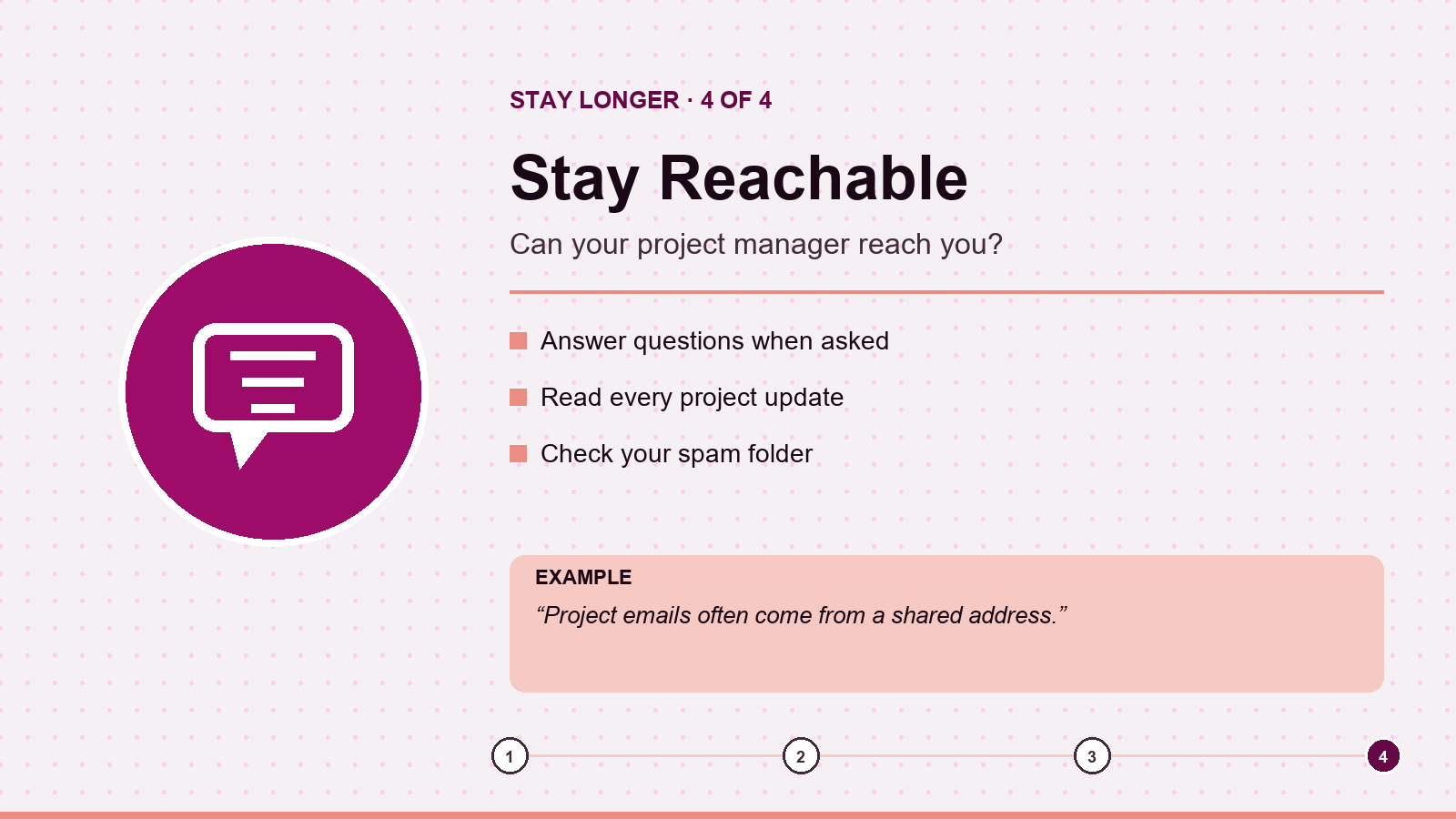
Habit 4 for staying on a project: stay reachable, answer your project manager and check your spam folder
Does Good Performance Lead To More Projects?
Yes. OneForma records how experts perform on each project, and recruiters use that record to prioritize people with proven quality. Good performance on one project can lead to an invitation to another, as long as the work is similar. Strong results in one kind of evaluation will not fast-track you into a very different project type.
This question came up twice in the session chat. What counts as good performance is simpler than it sounds: on most projects, it means following the guidelines closely, task after task, and you do not need years of experience to do that.
Why Are There No New Tasks On My Project?
A quiet week does not mean you were removed from the project, and it does not hurt your chances on other projects. Task volume is hard to predict. Sometimes a project gets half the volume expected, sometimes double, and project managers do not always know in advance either. They share changes as soon as they can.
Timing shifts too. Miren, our Senior Community Manager, gave an example from the session: a project confirmed in five languages can receive tasks in Italian first, and English only weeks later. Each batch is then prepared by project managers by hand before it reaches you. When a project is recruiting, it is because the work is confirmed, even if the exact date is not.
So if you were endorsed and have not heard anything yet, it does not mean nothing is happening. Behind the scenes, a team is working every day to get tasks to you, and sometimes it simply takes longer than they expected. And if you have a track record, project managers would rather keep working with you than start with someone new.
How To Stay On A Project For Years
Staying on a project comes down to the same small things, repeated: take the time to learn, never guess, keep the right pace, and stay in touch. None of them needs a special skill. Do them on this project and they follow you to the next one, because your record travels with your profile and project managers remember the experts they can count on.
"Good performance is actually doing what is supposed to be done in this project, which the guidelines provide."
Work that values what you know.
Comments (0)
Popular

Dive in
Related
Blog
How to Give Yourself the Best Possible Chance on a Project Certification
By Aleksandar Scekic • Jun 29th, 2026 • Views 505
Blog
How To Unlock More Projects On OneForma (Recruiter's Advice)
By Aleksandar Scekic • Aug 18th, 2026 • Views 1.1K
Blog
3 Things Language Experts Can Do Today to Stay in Demand
By Aleksandar Scekic • Aug 12th, 2026 • Views 214
Blog
How to Give Yourself the Best Possible Chance on a Project Certification
By Aleksandar Scekic • Jun 29th, 2026 • Views 505
Blog
How To Unlock More Projects On OneForma (Recruiter's Advice)
By Aleksandar Scekic • Aug 18th, 2026 • Views 1.1K
Blog
3 Things Language Experts Can Do Today to Stay in Demand
By Aleksandar Scekic • Aug 12th, 2026 • Views 214